
The Twenty-Ninth Scroll

You can hybridize a lot of different animal species together, provided they are closely related enough. This isn’t news to anyone- you can’t ever have a real, living minotaur or a griffin1, but birds hybridize regularly, and among mammals we all know about mules and coywolves and ligers (oh my!)
However, there are some odd cases at the margins where that “closely related enough” corollary becomes a bit muted. For instance, the pumapard- a cross between a puma and a leopard. The last common ancestor of these animals lived sometime between 8 and 16 million years ago. The cama is another oddball, a hybrid between a male dromedary camel and female llama. The camels and llamas split around 17 million years ago, way back in the early Miocene. These hybridization attempts are only successful a small fraction of the time- for the cama, about 1 in 6- because they are at this point only distant relatives… but you can do it.
We know too from ancient DNA samples that humans were readily interfertile with non-human hominins. Neanderthals are the most famous of these, but they were just one of many neighbors we shared the planet with thousands of years ago. We also snookied with Denisovans, who themselves interbred with something like the primitive Homo erectus.
It isn’t well-constrained how far back this might go, though, because there are a lot of “ghost hominins” knocking around in our genetic closet. We have no idea what they were or how long ago they diverged from us. Probably not 16 million years ago, but… well, who can say?
There is a disgusting and startlingly persistent rumor that back in the 1920s, at a primate research facility in Orange Park, Florida2, researchers decided to try the unthinkable. Since neither Jurassic Park nor Planet of the Apes had been made yet, and scientific notions of animal rights at the time would be best described as “primitive”, these ill-advised researchers decided to artificially inseminate a female chimpanzee with human semen.
According to the story, it worked.
A viable pregnancy was carried to term and a live birth ensued, and these scientists held in their arms the world’s first bouncing baby humanzee.
They were, naturally, horrified by the implications what they had done, and after a few days the infant was euthanized.
Now, there are some points for and against this story being true. In favor:
Gordon Gallup, well-respected evolutionary psychologist who invented the mirror test, says the story is true.
Humans and chimps diverged between 13 and 5 million years ago, well within the time constraint we have established with pumapards and camas, where it might work sometimes.
And against:
Gallup only heard the story secondhand from one of his university professors, who worked at the Orange Park facility… so this story may even be third or fourthhand at this point… it reeks of rumor, or something told to mess with new hires.
Concerted efforts by Ilya Ivanov to create a humanzee by the exact same method of artificial insemination, carried out on three female chimps in French Guinea, failed.
This last point would still fit within the cama bounds though- remember, that only works 1 in 6 times. Here we have the experimental success of human-chimp hybridization attempts (presently and hopefully forevermore) constrained to about 1 in 4?
None of these hideously disgusting issues are what I want to discuss here, though. I don’t really care if the story is true or not- it might be, but I hope it isn’t.
My question is- if the story is true, was the humanzee legally a U.S. citizen?
The Fourteenth Amendment to the U.S. Constitution reads as follows:
Section 1. All persons born or naturalized in the United States, and subject to the jurisdiction thereof, are citizens of the United States and of the State wherein they reside. No State shall make or enforce any law which shall abridge the privileges or immunities of citizens of the United States; nor shall any State deprive any person of life, liberty, or property, without due process of law; nor deny to any person within its jurisdiction the equal protection of the laws.
Now, in the U.S. legal personhood is a thorny issue. Corporations and government entities are legal persons per U.S. v. The Cooper Corp and U.S. v. The Cooper Corp, but biological humans who are braindead or unborn (and sometimes even recently born) are not. And for much of our history, slavery was legal and enslaved persons existed in a weird sort of superposition between property and person3.
No animals are considered legal persons in the U.S., although we do thankfully have mostly good animal rights laws4 and people can be convicted for abusing animals.
So, would a genetic hybrid between a human and an animal be a legal person? It’s half human, after all. I think the court case- and God help the lawyer who takes up this torch of justice- would ultimately revolve around whether the humanzee is legally a person or an animal.
If we grant that the humanzee baby was a legal person, and was born in the U.S., I think it would follow that- per the wording of the Fourteenth Amendment as it is presently interpreted5, that humanzee baby was legally a citizen.
Thus, the scientists at Orange Park were not only responsible for a monstrous, morally and ethically appalling abuse of scientific curiosity… they were also guilty of murder.
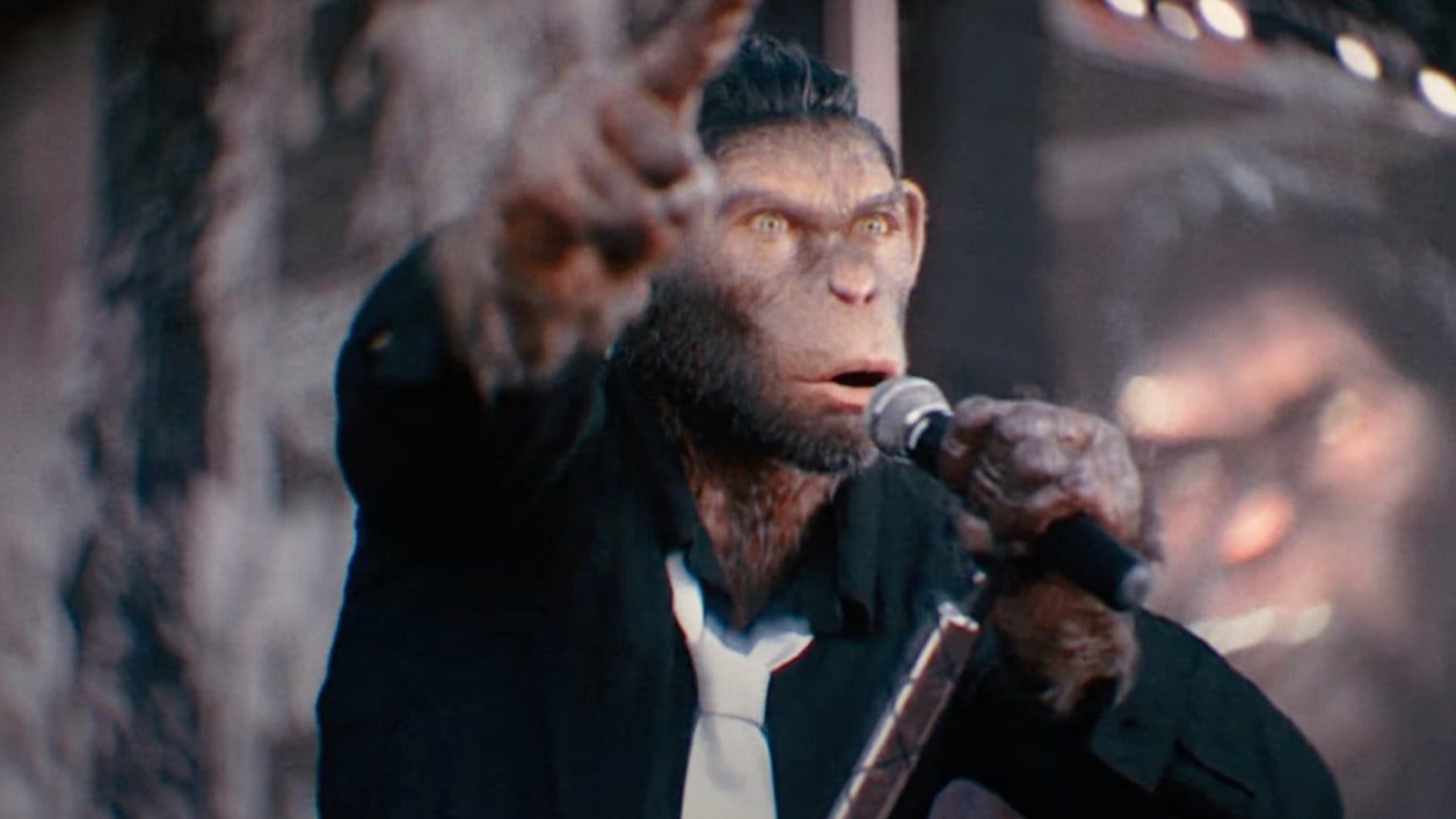
Unless you’re the bones of a Protoceratops
The first such facility in the USA
There are a handful of court cases of slaves suing for their own freedom with… varying degrees of success.
Plenty of room for improvement…
Yes I know birthright citizenship is highly contentious and I have my own opinions on the matter but THAT ISN’T WHY WE’RE HERE SO PLEASE WITHHOLD COMMENTS ON IT!
Thank you (?) for letting me know about these rumored humanzee experiments.
I'll also note that the 1920s were the golden age of eugenicist thinking in US science and law. I think that "let's make and murder a humanzee" is consistent with eugenicist ideas.
Thank you for this exploration of a scientific, legal, and philosophical conundrum I never wanted to think about